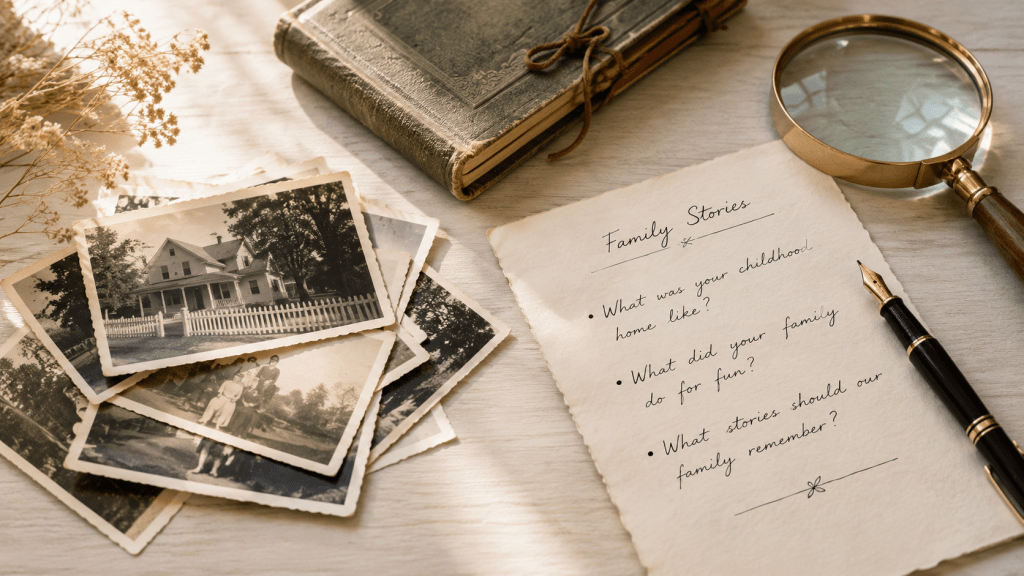
Family stories have a way of disappearing quietly. A name, a funny childhood memory, the story of how two people met — things everyone assumes they will remember can be gone in a generation.
You don’t need a formal interview or a long list of genealogy questions to begin. Sometimes one good question is enough to open the door to a story you’ve never heard before.
You don’t need a formal interview or a long list of genealogy questions to begin. Sometimes one good question is enough to open the door to a story you’ve never heard before.
1. What was your childhood home like?
Ask them to describe the house, the neighborhood, who lived there, where they slept, and even the sounds and smells they remember. Small details can bring an old family story to life.
2. What did your family do for fun when you were growing up?
Games, radio programs, Sunday drives, swimming holes, family gatherings, and neighborhood adventures can reveal a side of everyday life that rarely appears in official records.
3. What do you remember most about your parents and grandparents?
This is a wonderful way to learn about relatives you may never have known. Ask what they looked like, what they were like, what they did for a living, and what made them laugh.
4. What family traditions did you have?
Holiday meals, birthday traditions, Sunday dinners, reunions, recipes, sayings, and little routines are all part of a family’s history.
5. What was school like for you?
Ask about favorite teachers, school friends, subjects they loved or hated, how they got to school, and any trouble they managed to get into.
6. What was your first job?
First jobs often lead to great stories. Ask how much they were paid, what they did with their first paycheck, and what they remember about their coworkers.
7. How did you meet the person you fell in love with?
Even if you think you already know the story, ask again. There are often details that have never been written down — first impressions, early dates, proposals, weddings, and funny moments along the way.
8. What major events do you remember living through?
Wars, storms, floods, economic hard times, technological changes, local events, and national news can all become much more meaningful when told through the eyes of someone who experienced them.
9. What is something you wish you had asked your own parents or grandparents?
This question can uncover family mysteries, forgotten names, unanswered questions, and stories that were almost lost.
10. What do you most want future generations of our family to know?
This may be the most important question of all. Give them time to think. Their answer might be a story, a lesson, a family value, or simply something they hope will never be forgotten.
Start With Just One Question
You don’t have to record an entire life story in one afternoon. Start with one question. Listen. Let the conversation wander. The unexpected stories are often the ones worth keeping.
Write the answers down, record the conversation if everyone is comfortable with it, and make copies for other family members. Names and dates are important, but the memories behind them are what turn genealogy into family history.
The best time to preserve a family story is while someone is still here to tell it.
Preserve Your Own Story
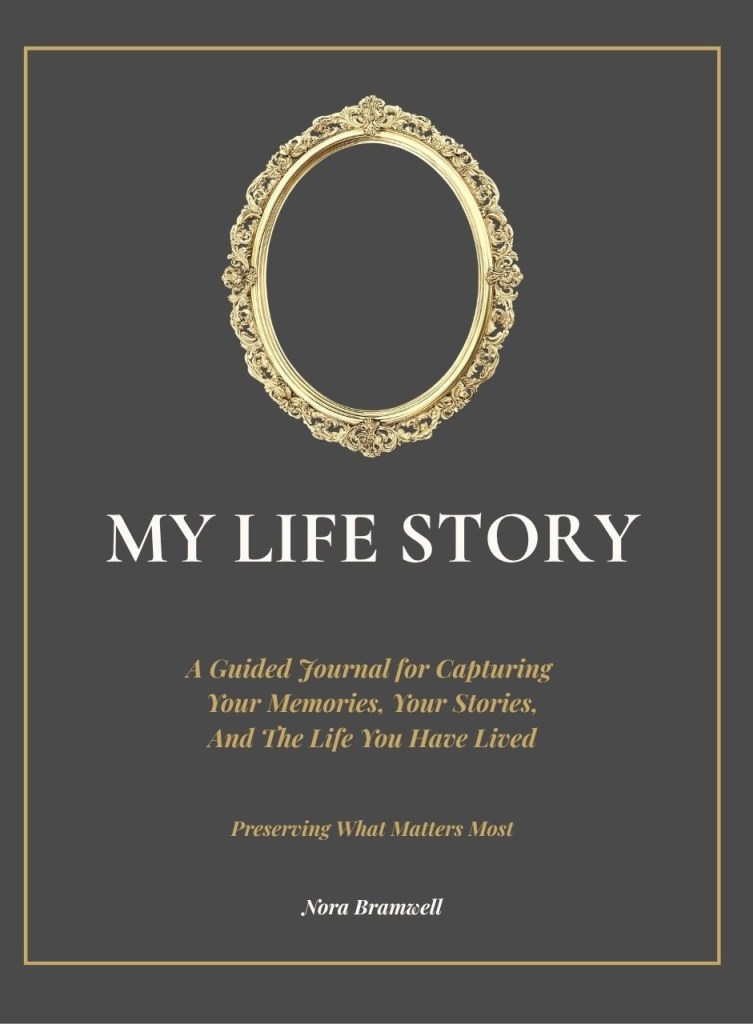
My Life Story is a guided journal designed to help preserve memories, family stories, and the moments that make a life unique — one question at a time.


Leave a Reply